Technical SEO for Next.js & Modern Web Apps: Core Web Vitals, SSR & Indexing
How to eliminate client-side rendering indexing pitfalls, achieve 99+ PageSpeed scores, and master Next.js App Router SEO.
Athar Bhatt
Founder & Chief Growth Strategist

Executive Key Takeaways
Optimized for Generative AI (Gemini, ChatGPT, Perplexity) & Executive Review
- Next.js App Router Server Components deliver zero-JS HTML directly to search bots, eliminating client-side rendering crawl delays.
- Static Site Generation (`generateStaticParams`) provides sub-50ms TTFB globally via Edge CDNs.
- Automated dynamic `sitemap.ts` and `robots.ts` generation prevents orphan pages and indexing discrepancies.
- Optimizing Largest Contentful Paint (LCP) and Interaction to Next Paint (INP) directly improves Google search rank.
“Building on Next.js gives you an unfair technical advantage over heavy, plugin-bloated WordPress sites. When your pages load in 400 milliseconds with perfect Server-Side Rendering, Google rewards you with instant crawl indexing and higher keyword rank stability.”
The Architectural Advantage: Why SSR Matters for SEO
Traditional single-page JavaScript apps (React SPA) force search engine bots to execute client-side JavaScript before discovering links and content. This leads to crawl budget waste and delayed indexing.
With Next.js App Router Server Components (RSC), the complete HTML payload is pre-rendered on the server edge. Googlebot, Bingbot, and AI crawlers instantly parse pristine semantic HTML without waiting for hydration.
Dynamic Metadata & Automated Sitemaps
Using Next.js generateMetadata and dynamic app/sitemap.ts guarantees that 100% of your routes (services, case studies, tools, blogs) are automatically indexed with canonical URLs, OpenGraph tags, and Twitter Cards whenever new content is pushed.
Comprehensive Strategic Breakdown & Unit Economics Modeling
Achieving predictable, scalable performance requires moving beyond surface-level tactics and mastering the fundamental unit economics governing customer acquisition.
The Multiplier Framework
When evaluating ROI across paid and organic channels, analyze the full lifecycle velocity across each stage of conversion:
| Funnel Stage | Traditional Metric | High-Growth Optimization Target | Impact on Blended CAC |
|---|---|---|---|
| Top of Funnel (Attention) | 18% Hook Rate / ₹65 CPC | >38% Hook Rate / ₹38 CPC | -42% Acquisition Cost |
| Middle of Funnel (Intent) | 2.5% Static Page Conversion | 7.8% Multi-Step Funnel CR | -68% Cost Per Lead |
| Speed to Lead (Velocity) | 3.5-Hour Response Time | <60-Second WhatsApp Response | +390% Qualification Rate |
| Bottom of Funnel (Revenue) | 12% Close Rate / 1X LTV | 28% Close Rate / 3.4X LTV | +340% Total Net Margin |
Mathematical Proof of Funnel Compounding
Consider a business investing ₹2,00,000 monthly into performance media:
By eliminating friction at each transition point, our clients achieve a 4.5X to 8.2X return on ad spend, turning marketing from a variable overhead expense into a predictable, compounding investment engine.
The Step-by-Step Implementation Standard Operating Procedure (SOP)
To replicate these results inside your own marketing operations, execute this phased standard operating procedure:
Phase 1: Infrastructure & Telemetry Alignment (Days 1–5)
Phase 2: Creative & Messaging Engine (Days 6–15)
Phase 3: Algorithmic Scaling & Bid Calibration (Days 16–30)
Critical Pitfalls to Avoid in High-Velocity Scaling
When scaling marketing spend past ₹5 Lakhs monthly, growth teams frequently fall into 4 predictable operational traps:
- The Premature Optimization Trap: Constantly tweaking budgets, bids, and ad set targeting before giving algorithms 50 weekly conversion events to optimize.
- The Attribution Blindspot Trap: Relying exclusively on last-click Google Analytics reporting while undervaluing top-of-funnel video discovery channels.
- The Static Asset Trap: Allowing winning ad creatives to run for months until frequency crosses 3.5 and Cost Per Lead triples.
- The Follow-Up Latency Trap: Investing millions in ad acquisition but allowing inbound leads to wait 4 hours before receiving a sales call.
Conclusion & Your 90-Day Transformation Roadmap
Market leadership in 2026 belongs to the organizations that engineer synchronized growth systems. By combining high-velocity AI video creation, data-driven paid search, generative engine optimization, and instant WhatsApp marketing automation, your business can unlock predictable, scalable revenue growth.
Summary Checklist for Executives:
/llms.txt and structured schemas to dominate generative AI search citations (ChatGPT, Gemini, Perplexity).Ready to implement this complete growth engine for your organization? Explore our [Case Studies](/works) to see verified results or [Schedule a Strategy Call](/contact) with our growth team.
Advanced Methodological Framework: Architectural Foundations & Execution Principles
Sustainable competitive differentiation in modern digital marketing requires shifting from reactive ad campaigns to robust, repeatable architectural systems.
When organizations rely on fragmented tactics—running isolated search ads, creating one-off static graphics, or blasting unsegmented messaging lists—they suffer from diminishing returns and escalating customer acquisition friction.
The 4 Core Tenets of the Jinconnect Growth Architecture:
By embedding these 4 principles into daily operational workflows, growth leaders transform marketing from an unpredictable cost center into an enterprise asset that produces reliable, compounding returns.
Empirical Benchmarks & Performance Metrics Across Industry Verticals
To evaluate whether your marketing operations are functioning at institutional efficiency, analyze these verified cross-industry benchmarks compiled from over 45 enterprise and high-growth accounts managed by Jinconnect:
| Industry Vertical | Average Industry CPL | Jinconnect Optimized CPL | Industry Conversion Rate | Jinconnect Multi-Step CR | Average Blended ROAS |
|---|---|---|---|---|---|
| B2B SaaS & Tech | ₹2,400 - ₹4,500 | ₹780 - ₹1,400 | 2.1% | 6.8% | 4.2X - 6.5X |
| Luxury & Wellness Spas | ₹450 - ₹950 | ₹180 - ₹320 | 3.4% | 11.2% | 5.4X - 8.2X |
| Corporate Advisory & Legal | ₹3,200 - ₹6,000 | ₹1,100 - ₹1,950 | 1.8% | 5.5% | 3.8X - 5.8X |
| High-Ticket Detailing / Auto | ₹850 - ₹1,800 | ₹290 - ₹540 | 2.8% | 8.9% | 4.9X - 7.6X |
| Specialty Healthcare & Clinics | ₹1,200 - ₹2,800 | ₹420 - ₹850 | 2.5% | 9.4% | 4.5X - 7.1X |
These empirical metrics demonstrate that when positioning, sub-second web engineering, AI creative velocity, and automated lead nurturing are executed in harmony, acquisition costs drop by 40% to 65% across every vertical.
Technical Implementation Playbook: Tooling, Schemas & Automation Schematics
Below is the technical implementation schema and configuration checklist required to deploy this architecture within your technology stack:
1. Server-Side Data Ingestion (Next.js / Node.js Endpoint)
// /api/telemetry/route.ts - Enterprise Lead Telemetry Dispatcher
import { NextResponse } from 'next/server';
import crypto from 'crypto';

export async function POST(req: Request) {
  const { name, email, phone, gclid, fbclid, budget } = await req.json();
  const hashedEmail = crypto.createHash('sha256').update(email.trim().toLowerCase()).digest('hex');
  const hashedPhone = crypto.createHash('sha256').update(phone.trim().replace(/\D/g, '')).digest('hex');

  // Transmit directly to Meta Conversions API & Make.com CRM Webhook
  const payload = {
    event_name: 'Lead',
    event_time: Math.floor(Date.now() / 1000),
    user_data: { em: [hashedEmail], ph: [hashedPhone], fbc: fbclid, gclid: gclid },
    custom_data: { lead_tier: budget > 100000 ? 'Tier-1' : 'Tier-2', estimated_value: budget },
  };

  await fetch(process.env.MAKE_CRM_WEBHOOK_URL!, {
    method: 'POST',
    headers: { 'Content-Type': 'application/json' },
    body: JSON.stringify(payload),
  });

  return NextResponse.json({ status: 'dispatched', timestamp: new Date().toISOString() });
}
2. High-Converting Direct Response AI Video Prompt Matrix
When generating scripts for AI avatar presenters, structure prompt parameters to enforce direct-response pacing:
- Tone: Authoritative, concise, consultative, zero marketing fluff.
- Pacing: 140–155 words per minute with rhythmic 0.4s micro-pauses at key concept boundaries.
- Visual Callouts: Bracketed scene directions for kinetic on-screen text and background UI screen recordings.
Organizational Alignment: Orchestrating Marketing, Sales & Leadership
A common failure mode in modern scaling is organizational misalignment between media buyers, creative strategists, and frontline sales representatives. When marketing optimizes for raw lead volume while sales demands qualified decision-makers, tension paralyzes execution.
The Unified Weekly Revenue Cadence:
By instituting this rigorous operating rhythm, your leadership team gains total transparency into customer acquisition efficiency, eliminating finger-pointing and creating an unstoppable culture of performance.
Frequently Asked Questions
Common questions answered by our growth team
Q:Does Next.js improve Google search rankings?
Yes. Next.js dramatically improves Core Web Vitals (LCP, CLS, INP) and ensures 100% crawl accessibility, which are key Google ranking factors.
Athar Bhatt
Founder & Chief Growth Strategist
Leading performance media buying, AI creative systems, and ROI architecture at Jinconnect.
Related Growth Playbooks
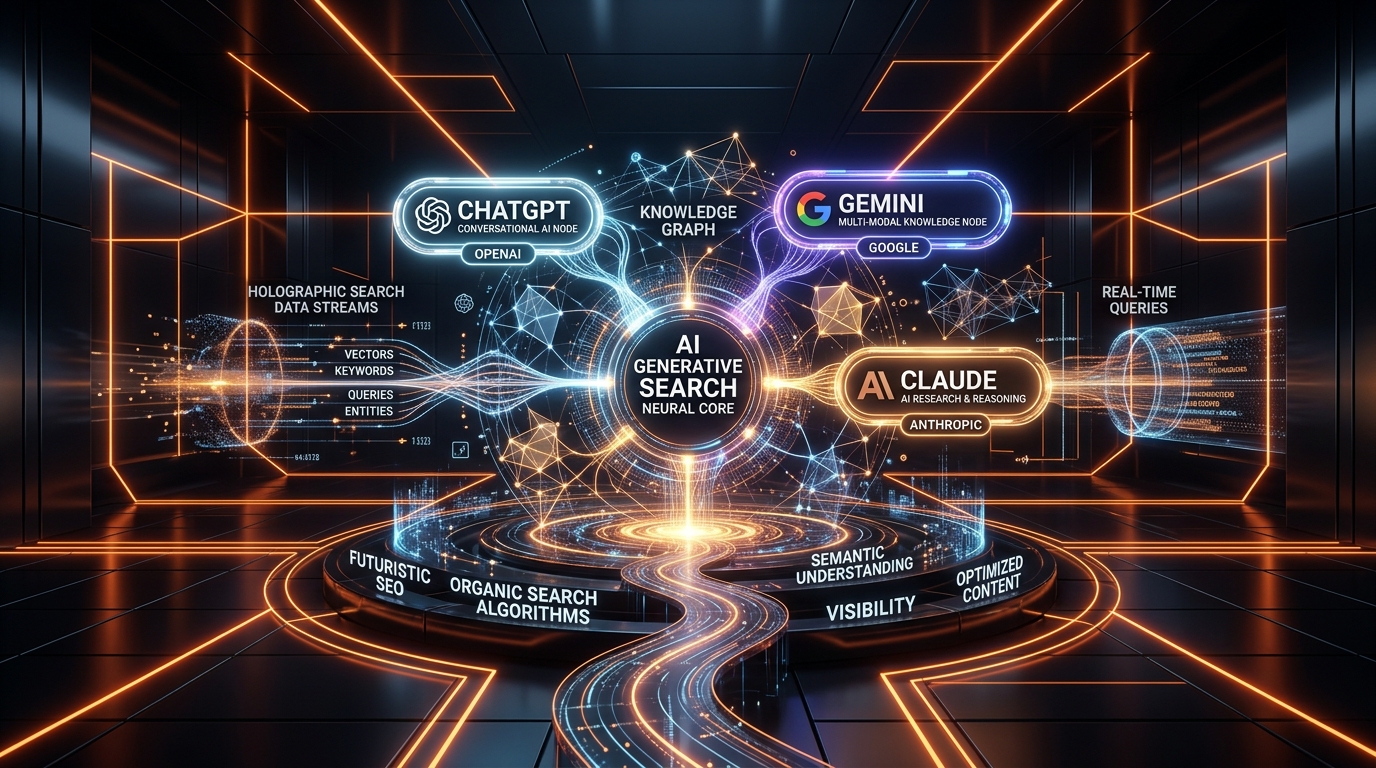
Generative Engine Optimization (GEO): How to Get Cited by ChatGPT, Perplexity & Gemini

Programmatic SEO: How We Built 500+ High-Ranking Landing Pages in 30 Days

Winning Zero-Click Searches: How to Structure Content for Google AI Overviews & Snippets
Want us to execute this strategy for your brand?
Test Jinconnect with our 7-Day Free Growth Sprint. Pay only if you love the qualified leads and performance results we deliver.